
As time passes me by – goodness, how many years since I first started on this journey of offering support to my fellow human beings?… – I find I am more and more often checking in with how things are going.
Am I working to the best of my abilities? Do I need to do more? Or less? What would add or be valuable to both the work and to me? And to anyone who would ask me to help them, come to think of it?

I often notice how other therapists are, how they present themselves, how they word matters on their websites and blogs, and sometimes there are things that really resonate with me – I recognise something about what they’re doing in what I’m aiming to do. Often this can bring a sense of ‘distanced togetherness’ – seeing that there are others out there who hold similar aims – and sometimes I follow examples as shown by fellow therapists.
And sometimes there are things that jar me; things that make me sit up as I just can’t seem to place those things in a therapeutic space.

I’ve found myself thinking about not only the qualities that would make a good enough therapist in the room working directly with people, which I might call part of the technical knowhow of that therapist; the how they do the thing that they do, how they perform tasks learnt through their trainings, but also some of the other qualities or even expectations that could be said to also be a part of anyone’s therapy offerings.
As outline guides, I might look under the themes of technical knowhow, personal behaviour, and business practice.
1/ Technical knowhow.

This would be the theoretical basis upon which a person offers support and service to others; the qualifications, the proofs of having studied and learned.
There’s a whole minefield of qualifications out there, ranging from brief internet accessible courses from generic providers that give an introduction or a taster of a particular field of study, to the higher level courses from universities and colleges that are awarded degrees and doctorates on completion.
In terms of the therapeutic world, I would argue that being able to study theory isn’t enough; many of the professional bodies do not accept just qualification certificates alone because they are looking for the practical abilities as well. The student being examined ‘in vivo’, being assessed as to the how they actually put into practice what they have learned.
Many of the voluntary professional registers of practitioners, like BACP, NCP, APA, etc, do not accept just qualification paperwork. They too look for the manner of the therapist, and by this they ask for proofs of continuing study and professional development, of clinical supervision – evidences that the therapist isn’t merely sitting on their laurels of their initial studies and holding an open mind to future knowledge and oversight by an experienced supervisor. In the case of APA, any applicant to their register is also directly interviewed and asked questions about their level of self-awareness, taking the professionalism that step further on from documentation (certificates and diplomas, etc) given by other places.
2/ Personal behaviour.

Taking a look at the technical knowhow of a person is a start, and I would add to that the personal behaviour of the therapist.
Dr Harold Shipman, after all, had passed all the exams and assessments of practice in order to become a medical doctor and be registered with the GMC. However, his behaviour was, to put it mildly, suspect.
Similarly, if a car mechanic specialises in the diagnosis of electrical problems in cars and does this very well indeed, showing particularly excellent technical knowhow of the thing he or she has studied, but whilst doing this breaks every window in the car and verbally attacks anyone who asks about the broken windows, we wouldn’t be terribly pleased with him as a car mechanic. His behaviour would colour any perception of his professionalism.
The behaviour of a professional I would suggest is inherently linked with the perception of their profession, and of them, and as such I would offer is a part of sussing out if you are, or have found, a good enough therapist.
Now, here I am not talking about the down-times when we might allow for a person to let their hair down, shout a bit, maybe get a tad tipsy in the pub (when we can get back to those places properly…), be their relaxed human selves… but when a professional acts professionally in all matters linked with their profession, that’s a good sign. As has been offered to me in discussion, ‘it’s not about not messing up; it’s about how we handle matters should we find we have messed up’. Because after all, perfection doesn’t exist, and what one person may find excellent, another may not agree and may need something or someone different.
3/ Business practice.

How the therapist conducts their business, not just in the room with clients, but also how they manage their requirements of membership, supervision, study, communications with the public, advertisements of their service…. All these matters of business running are also part and parcel of a good enough therapist.
It aids the trust between the therapist and the public – to know that when you exchange your hard-earned cash for therapy, you’re not funding crime syndicates or a chronic drug habit that could impinge on any work carried out. That the therapist you may choose to work with is behaving appropriately with their finances, their health, and the public at large for the most part, can all add to the sense of confidence that this person is steady enough to be helpful.
All these 3 matters, the technical knowhow, the personal behaviour, and the business practice are covered by most of the voluntary professional membership bodies.

Concerns about my behaviour, if raised with a membership body with which I am affiliated, I have no doubt would be thoroughly looked at – and rightly so. If I started to yell abuse at my neighbour, for no good reason, and, say, APA got wind of this, they may start to ask if I’m alright…. And if it transpired that my yelling abuse was malicious, I would not be asked to leave APA – I would be removed.
Acting in an abusive fashion, even in one’s personal life, doesn’t really sit well with me if that person is a therapist – the fact that that therapist can easily step over the line between decent or good enough behaviour and abuse leaves me incredibly uncomfortable around the field of trust. I don’t hold to their being any place for abuse in any therapy.

The question of my qualifications is easily checked – my certificates are on the office wall, and copies of these had to be sent to my membership bodies as proof of my technical knowhow.
And as for my business practice… again, I have no doubt that should I be called to account for any financial discrepancies by HMRC and find myself under official scrutiny there, my membership bodies would view that very dimly indeed. In fact, if memory serves, the BACP specifies fiduciary responsibility as part of their requirement of their members.
So, as you can see, it’s not just a case of a quick bit of online study and Bob’s your Uncle, you’re fully qualified and can now offer your services to the paying public… add on the prudence of professional insurance to practice (again, a requirement of most professional membership bodies), continuing to learn and update knowledge, engage meaningfully in clinical supervision, practice self awareness, be open to criticism and questions… all add up to the basis for those who could be called Good Enough Therapists.
If you find that you have a concern about a therapist of any variation, please don’t hesitate to ask about the issues that are giving you concern.
You may find you are supported in finding out what is what, and the why’s of it as well, the aim being for understanding and open and honest agreement.
Those places where ranks are closed, where concerns are rejected at first glance – those places give me concern. I believe no question is a stupid question, and every question or concern comes from a place of wishing to know and understand.
So, if you find yourself in the midst of the struggle to be heard, to be understood in your concerns, to be taken seriously, or your questions are shouted down or ignored, please don’t struggle alone.
There are organisations out there set up to assist you in your efforts, both officially and less so. There are support organisations of people who have experienced similar, and can empathise, support, and guide. There are also official places, like Citizens Advice and ACAS who can guide in the more official and practical matters.
And there are therapists who have also had ranks closed on them and their concerns, who have perhaps also had issues with police and government that lead to complaints being upheld, and who can support you in your efforts emotionally as fellow human beings and as professionals.
And if you’re looking for support and help with things you’ve been struggling with, then talking with a therapist can sometimes be like turning on the lights so you can see better.
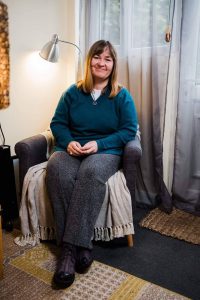
Rosalyn Young is a qualified mental health nurse with over 30 years
experience in govt and private agencies helping those in crisis
and in recovery. She has studied counselling to degree level,
and specialises in working with survivors of childhood abuse
and neglect, PTSD, DID, and emotional regulation problems.
She lives in Lincolnshire with her husband and a variety of
companion animals, is a keeper of bees, brewer of mead, and student of
growing things in the garden.

Contact her on 07906260310, or email contact@timeforcounselling.co.uk


